
Seatti Design Principles 2026
Designing Seamless Work Experiences with Seatti
Together with our customers, we create intuitive tools that make hybrid work easier, more connected, and more human.
Seatti GmbH – Munich, Germany
Version 1.0
Table of contents
1. Executive’s Summary
Quick summary of what this document is about.
2. Introduction: Building Better Work Experiences Together
How Seatti helps organizations create seamless, efficient, and human-centered hybrid work environments.
3. Brand Identity & Tone of Voice: Clear, Trustworthy Communication
How our visual and verbal identity ensures clarity and consistency - so customers always know what to expect from Seatti.
4. User Research & Product Development: Designed Around Your Needs
How ongoing user research and customer feedback directly shape product decisions, ensuring Seatti reflects your real workflows.
5. UX Principles & Cognitive Laws: Making Every Interaction Effortless
How we apply proven design principles to make the product intuitive, predictable, and enjoyable to use — right from day one.
6. Design System at the Core: Consistency You Can Rely On
How our design system guarantees a coherent experience across features and platforms, speeding up improvements without compromising quality.
7. Accessibility Standards: Inclusive Design for Everyone
How Seatti ensures equal access and usability for all users, creating a fair and welcoming digital environment.
8. Conclusion: Designing for the Future of Work
_________________________________
1. Executive’s Summary
Hybrid work has fundamentally changed how organizations use office space. Without a structured and scalable approach, companies risk underutilized offices, fragmented employee experiences, low adoption of digital tools, and inefficient real estate investments.
This document outlines how Seatti addresses these challenges — through a deliberate, research-driven design strategy that ensures long-term adoption, scalability, and measurable business impact.
Why this matters:
• Workspace decisions today directly affect operational costs, employee satisfaction, and collaboration quality.
• Digital tools that are not intuitive or inclusive create hidden costs — training effort, support overhead, and low engagement.
• In hybrid environments, user adoption determines whether a workplace strategy succeeds or fails.
Seatti is more than a booking tool — it is a strategic asset for modern workspace optimization and employee engagement. Our design approach ensures that the product is not only functional, but trusted, intuitive, and aligned with real organizational workflows.
By combining research, accessibility standards, cognitive principles, and a scalable design system, we reduce friction, increase adoption rates, and create a seamless experience across devices and teams.
Our design philosophy is built on five core pillars:
- Consistency: Our core Design System ensures that whether on mobile or desktop, the experience remains predictable — reducing training costs and increasing user confidence.
- Inclusivity: By adhering to WCAG 2.1 AA standards, we ensure every employee, regardless of ability, can navigate their workspace with dignity and ease.
- Evidence-Based: Every feature is born from UX Research, meaning we solve real friction points like "no-shows" and "dead zones" based on actual user behavior.
- Efficiency: We apply Cognitive Laws to minimize the mental effort required to book a desk, ensuring high adoption rates across the entire workforce.
- Clarity: Our Brand Identity is built on transparency, giving users a sense of agency and clarity over their physical work environment.
_________________________________
2. Introduction: Building Better Work Experiences Together
Today organizations must balance flexibility, collaboration, cost efficiency, and employee expectations — all while ensuring spaces are used effectively. Hybrid work has introduced new complexity into workplace management.
At Seatti, we help create workplaces that work for everyone - whether teams are on-site, remote, or hybrid. Our platform enables companies to manage office spaces intelligently, analyze occupancy patterns, and strengthen collaboration across locations.
Our identity is rooted in one mission: to create a win-win situation where both employees and companies thrive in hybrid work.
This document explains how every part of our design approach - from brand identity and tone of voice to research, UX principles, design systems, and accessibility standards — works together to solve real customer challenges.
Our design philosophy is built around one simple idea: your teams should spend less time figuring out tools and more time doing great work. By combining a systematic, user-centred process with a robust design system, we deliver experiences that are consistent, scalable, and trustworthy across the entire product.
Over the past five years, we’ve continuously refined our UX practice through data-driven research and close collaboration with our customers. This partnership ensures Seatti evolves with your needs - remaining intuitive from day one and ready for the future of hybrid work.
_________________________________
3. Design System at the Core: Consistency You Can Rely On
Our design system ensures a seamless and intuitive experience across Seatti, so every interaction feels familiar and reliable.
- Predictable and consistent: A unified visual language makes it easy to navigate and use our platform. We have a solid foundation for colors and typography, a token-based holistic naming protocol.
- Rapid improvements: Component-based and token-based design (documented in Figma and inspired by open-source Shadcn React library) allows us to roll out new features quickly without disrupting your experience.
- Smooth, cohesive experience: Shared components and guidelines on how to use them across product and tech mean every component, and interaction feels integrated and thoughtful. All updates and improvements are documented and discussed at dedicated roundtables making sure all teams are aligned and user-experience - flawless.
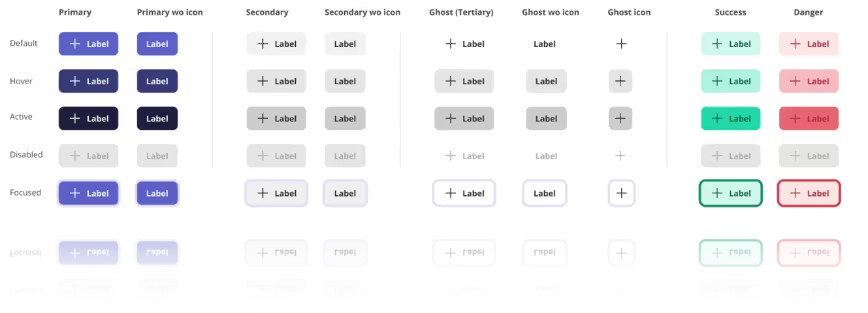
- Built to scale: As Seatti grows, our system ensures your experience remains consistent and high-quality.
_________________________________
4. Accessibility Standards: Inclusive Design for Everyone
At Seatti, we believe great design should work for everyone. That’s why we follow WCAG 2.1 AA standards, ensuring our platform is inclusive, easy to navigate, and enjoyable for all users — regardless of ability, device, or context.
What this means for you:
- Readable and clear: High-contrast UI and scalable typography (minimum 12px) make content easy to see and read.
- Fully navigable: Keyboard navigation and screen reader support help all users move through Seatti effortlessly.
- Accessible visuals: Alt text and ARIA labels ensure icons, maps, and floor plans are understandable for assistive technologies.
- Easy to interact with: Generous component sizes and clear input labels support quick clicks and taps without frustration.
- Comfortable experience: Reduced motion options are available for motion-sensitive users.
- Safe actions: Confirmation steps and undo options help prevent accidental changes.
- Inclusive communication: Microsoft Teams notifications are designed with both rich and plain text for full accessibility.
Our goal is simple: to make Seatti intuitive and welcoming for everyone, everywhere.
_________________________________
5. User Research & Product Development: Designed Around Your Needs
At Seatti, every feature starts with one question: “How will this make hybrid work better for our users?”
Our full-cycle, user-centric product development ensures that every update, improvement, and new idea directly responds to real needs - not assumptions.
This approach means you get a platform that’s intuitive, reliable, and constantly evolving with your feedback.
5.1. Discovery: Understanding What Truly Matters to You
Before we build anything, we ask questions, observe and listen.
We start by validating our assumptions through user interviews, questionnaires, and data analysis to uncover the real challenges people face in hybrid work.
We study the market and analyze competitors to make sure Seatti not only keeps up - but stays ahead in solving those challenges.
The latest round of user interviews focused on Real Estate and Facility Managers to explore how analytics could better support space optimization and office redesign.
Following a comprehensive discovery phase, we are now working on an analytics update, report integrations, and the implementation of IP-based check-in.
From these insights, we create personas that help us see through our users’ eyes - ensuring every decision is made with empathy and clarity. When needed, we run Design Sprints to quickly ideate, prototype, and test solutions - so our users get value faster.
Why it matters for you: You get a product designed for real-world challenges, validated by people who work like you - not based on some hypothesis.
5.2. Ideation: Co-Creating Solutions That Work in Practice Innovation happens when different perspectives come together, challenge each other, and turn ideas into solutions that truly make a difference. That’s why we run co-creation workshops and team brainstorms, bringing together Product, Engineering, Sales and Customer Success experts to find the best way forward.
We map user flows and blueprints to understand every touchpoint in user journey - ensuring a seamless, frustration-free experience from start to finish.
The latest cross-functional co-creation effort between designers, developers, the product manager, and other stakeholders focused on improving location-based Visitor Management.
We conducted a series of architecture mapping sessions, sketches, and wireframes, iterating until we reached a solution that was validated and approved by all stakeholders.
Why it matters for you: You benefit from a tool designed by a diverse team that thinks about user workflow from every angle.
5.3. Design & Testing: From Concept to Clarity
Once we align on priorities, our designers create mock-ups and interactive prototypes.
These are tested both internally and with real users, often going through several iterations and heuristic evaluations until we’re confident every interaction feels natural.
Before rollout our Tech, Product, and Customer Success teams conduct thorough testing to guarantee a smooth experience.
Why it matters for you: You get a product that’s been tested, refined, and simplified.
5.4. Transparency: Building Trust Through Openness
We believe great products are built in partnership with their users.
That’s why we maintain a public Product Roadmap, showing upcoming and in-progress features. Users can vote and influence development priorities - shaping Seatti together with us.
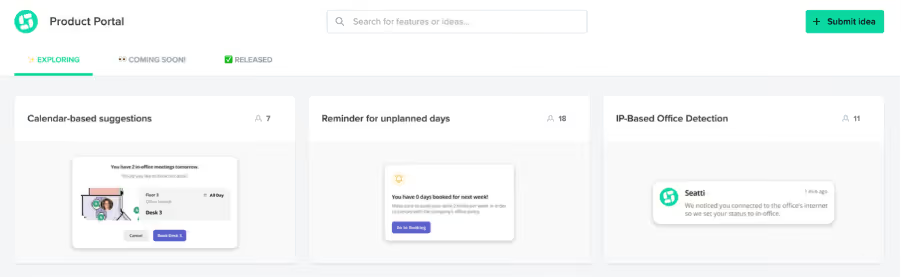
Image: Product Portal features that we have been exploring recently.
In addition, we continuously assess features by analysing usage data and feedback to identify opportunities for improvements.
_________________________________
6. UX Principles & Cognitive Laws: Making Every Interaction Effortless
Seatti’s user experience is guided by proven UX laws and heuristics to create an intuitive and frictionless experience.
6.1. We design flows to feel familiar, efficient, and predictable, guided by Jakob’s Law: “Users spend most of their time on other websites, so they prefer your site to work the same way as sites they already know.”
Our interfaces follow established conventions for navigation, buttons, forms, and other UI elements, drawing inspiration from Material Design.
Users have unified experience with Microsoft:
- notifications regarding favourite colleagues’ bookings and check-ins directly in Teams.
- calendar & absence sync.
- meeting room booking integrated with Exchange availability.
- presence status in Seatti apps and flows.
- same interaction patterns for recognition and recall.
- usage of Microsoft Fluent icons to maintain a consistent overall look and feel across the product.

6.2. Fitts’s Law is a principle in UX and human-computer interaction that predicts the time it takes to move to and select a target (like a button or link) based on its size and distance. With that in mind, we place frequently used actions within easy reach — for example, at the bottom right on desktop and in the thumb-friendly zone on mobile.
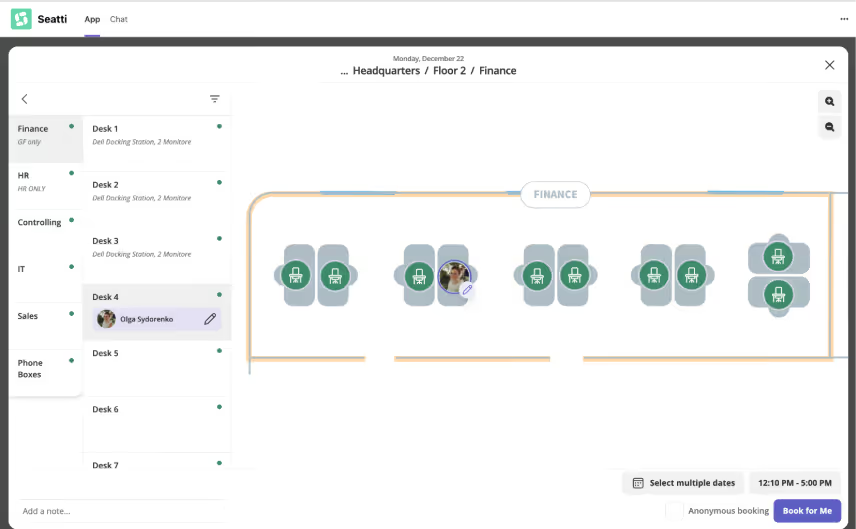
We also avoid small, tightly packed clickable elements by maintaining at least 8-px spacing between interactive items. This ensures users benefit from greater speed, comfort, and accuracy when interacting with our interface.
6.3. According to Hick’s Law, when people face too many choices, they slow down, hesitate, or may even abandon the task — this is also known as decision paralysis. Throughout the application, we display only the most relevant and frequently used options, helping users plan their week quickly and efficiently.

We apply progressive disclosure to keep interfaces clear and focused, revealing additional details only when needed.

Related options are grouped logically to reduce cognitive load,
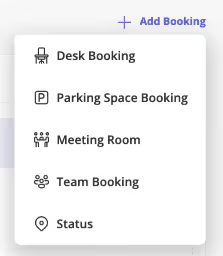
while contextual suggestions guide users toward faster, more confident decisions.
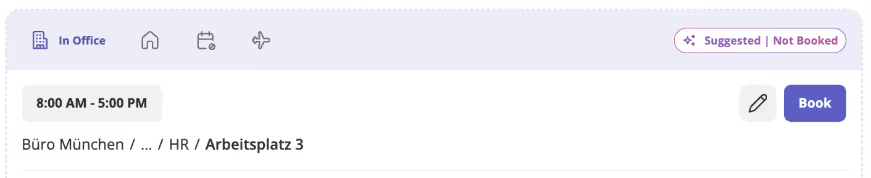
6.4. In UX design, the Law of Proximity and the Law of Similarity are key to creating clear, intuitive interfaces.
When items are placed near each other, users naturally assume they belong together — even without lines, boxes, or labels.
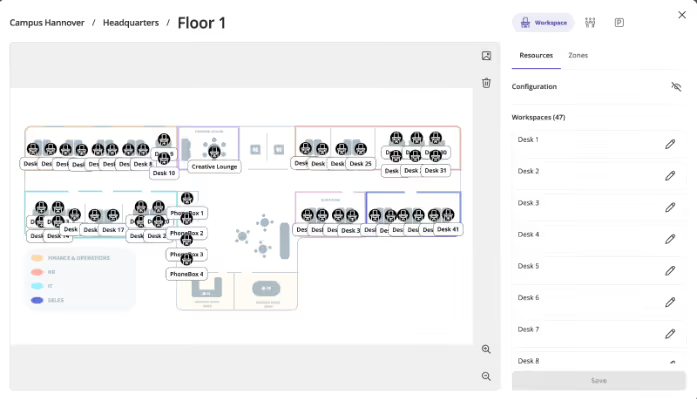
We group related actions, labels, and fields close together, which helps users scan and understand layouts faster.
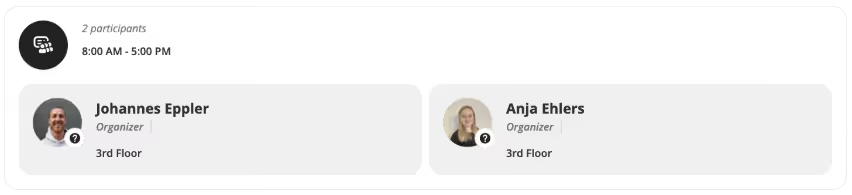
6.5. Mobile-First Design: Convenience and Consistency for You
Our mobile-first approach ensures that Seatti works seamlessly across desktop, tablet, and mobile devices, giving you the flexibility to manage your workspace anytime, anywhere.
- Stay agile: make quick check-ins or last-minute desk changes directly from your device.
- Consistent experience: Progressive enhancement guarantees that features work smoothly and reliably, no matter the device you’re using.
- Effortless accessibility: Whether at your desk, in a meeting, or on the go, you can always interact with Seatti without friction.
_________________________________
7. Brand Identity & Tone of Voice: Clear, Trustworthy Communication
7.1. Why it matters
Our brand identity and tone of voice ensure that users always feel guided, supported, and empowered to make the most of their hybrid workday.
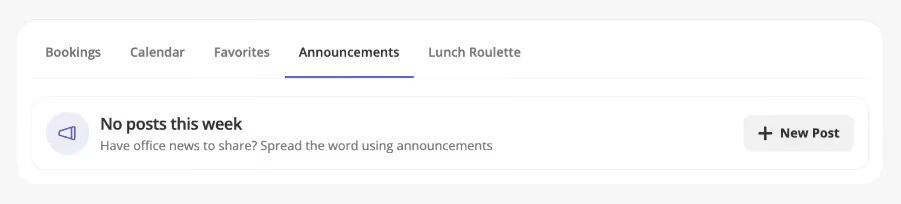
By combining clarity, warmth, and innovation, we help our customers achieve what truly matters: better collaboration, smarter use of space, and happier, more connected teams.
7.2. A brand built around people, flexibility, and innovation
Seatti’s brand expresses who we are and what we believe in - innovation, reliability, collaboration, and customer-centricity. It is more than visuals or words - it’s how we build trust. Every color, text, and interface element helps teams feel confident and in control, knowing they can focus on meaningful work instead of managing complexity.
7.3. Visual Identity: Clarity that inspires confidence
Seatti’s visual language is designed to make modern workplaces feel intuitive and empowering. It combines the precision of data with the warmth of human connection - reflecting our belief that technology should make work simpler.
- Clean and scalable design: a consistent use of brand and product colors, typography, and spacing ensures a calm and predictable experience.
- Visual consistency across touchpoints: from the app to website, every Seatti element looks and behaves in a unified way, building trust through familiarity.
- Functional beauty: our interfaces balance efficiency with personality — clear enough for quick action, expressive enough to feel engaging.
7.4. Tone of Voice: Clear, confident, and human
Our words are as important as our design. Seatti’s tone of voice bridges professionalism and approachability - speaking to users with respect, optimism, and clarity.
We aim to sound neutral yet warm, expert yet accessible, young and innovative without being casual or forced.
Our communication principles:
- Maintain consistency - use familiar patterns, clear terms, and active voice so users always know what to expect.
- Respect users’ time - short, precise, and helpful phrasing gets people where they need to go quickly.
- Build connection - a touch of playfulness and genuine tone strengthens the human side of our digital experience.
_________________________________
8. Conclusion: Designing for the Future of Work
Seatti’s design approach is research-driven, inclusive, and seamlessly integrated with the tools your team already uses. By combining robust UX principles with a modern design system and a focus on human agency, we ensure that Seatti not only meets your current workspace needs but evolves alongside them.
But great design is not about principles alone — it is about outcomes.
With this approach, we ensure that:
• Employees complete critical and complex actions — like desk bookings, meeting coordination, and schedule adjustments — quickly, confidently, and without error.
• Hybrid collaboration becomes intentional instead of accidental, increasing meaningful in-office interactions.
• Administrators gain clear, structured data outputs that transform occupancy patterns into actionable insights for strategic real estate and workforce decisions.
• Organizations reduce inefficiencies such as no-shows, underutilized spaces, and fragmented workflows.
• Adoption remains high because the system feels intuitive, accessible, and aligned with existing tools like Microsoft Teams and Exchange.
In short, Seatti removes friction from hybrid work — so your teams can focus on collaboration and performance, while your organization makes smarter, data-informed decisions about its workplace strategy.