


Key takeaways
- DGUV Regulation 2 (German statutory accident insurance regulation) has applied in its revised version since 1 January 2026: up to one third of support may be delivered digitally, and the threshold for simplified support models rises from 10 to 20 employees.
- DGUV Rule 115-401 “Office-based businesses” (January 2026) explicitly addresses desk sharing and flexible space concepts for the first time.
- ASR A6 “Screen work” (in force since 1 July 2024) forms the ergonomic foundation and explicitly covers desk sharing workplaces.
- The risk assessment becomes a living document: no longer “Does this desk suit Ms Müller?” but “Does every desk suit every potential user?”.
- A height-adjustable desk alone does not make you compliant. It must be demonstrably usable and actually used.
- Fines range from €5,000 (deficient risk assessment documentation) to €30,000 (non-compliance with an official order); deliberate endangerment becomes a criminal matter.
What has really changed legally in 2026?
Three sets of rules shape the discussion, and it pays to keep them apart:
1. DGUV Regulation 2 (revised version since 1 January 2026). It governs occupational medical and safety support, i.e. who provides it and to what extent. Up to one third of the prescribed support time may now be delivered digitally (video, telephone, online workshop), and the threshold for simplified support models rises from 10 to 20 employees. Purely digital support remains inadmissible; the company doctor and the occupational safety specialist (Sifa) must each cover at least 20% of the support time.
2. DGUV Rule 115-401 “Office-based businesses” (January 2026). This sector rule updates the May 2018 version and explicitly focuses for the first time on new forms of work, including desk sharing, flexible space concepts and psychological strain. It is not a regulation in the strict sense but specifies how the statutory requirements are met in practice.
3. ASR A6 “Screen work” (in force since 1 July 2024). This is the real ergonomic lever. ASR A6 explicitly covers desk sharing workplaces and makes one thing clear: adjustment options must actually be usable and used. Important for context: this is not a 2026 change, it has applied since mid-2024.
The core point: The obligation to carry out a risk assessment is old. What is new is that desk sharing is no longer treated as a special case but as the standard case, and therefore has to be assessed systematically.
Why the classic risk assessment no longer suffices for desk sharing
A classic risk assessment was essentially a snapshot: desk X, chair Y, screen Z, for one specific person, done. It is workplace-based. With desk sharing, where employees change desks every day, this logic no longer holds.
The decisive shift is from the individual desk to a system assessment. The question is no longer “Does this desk suit Ms Müller?” but “Does every desk suit every potential user?”. The updated requirements name exactly this “rotation risk”.
The consequence: the risk assessment becomes a dynamic document that must be fed with data continuously rather than filed away once a year.
Is a height-adjustable desk enough to be compliant?
Short answer: no. The suitability of the furniture is necessary but not sufficient.
The rules require that the adjustability is also usable, and that this is traceable. A height-adjustable desk that nobody knows how to operate is effectively a standard desk. Three things are therefore needed besides the right furniture: instruction, visibility (for example notices at the desk, self-checks) and traceability of whether this actually happens.
Rule of thumb: A height-adjustable desk does not make you compliant. You only become compliant once it is actually adjusted, and you can prove it.
How do I prove that my desk sharing system works ergonomically?
When a safety officer asks today “How do I actually prove this?”, a model with three building blocks helps:
- Furniture audit: are all bookable desks universally usable? (height, seating dynamics, monitor, input devices)
- Process evidence: are employees instructed? Is there coaching, are there self-checks, notices at the desk?
- Usage evidence: which desks are used how often? Are there “dead” areas or overloaded zones?
The first two building blocks can be solved organisationally. The third, the usage evidence, is the hardest in practice because it has so far mostly rested on assumptions. This is exactly where Seatti comes in: booking data, IP-based presence and utilisation analyses make visible which desks are used and how. The usage evidence becomes verifiable with data, and the risk assessment draws on real data instead of estimates. This is how risk hotspots and under-utilisation become visible in the first place.
Marc Burghoff therefore specifically recommends Office Intelligence platforms such as Seatti, which help to provide the usage evidence in a data-driven way.
Digital site inspection 2026: new option, new documentation duties
One of the most practically relevant changes: consultations may now partly be digital, up to one third of the support time. For distributed teams and multi-site organisations this is a noticeable relief.
Where digital makes sense: training, ergonomic coaching, occupational safety committee (ASA) meetings, follow-up consultations, documentation reviews.
Where on-site remains mandatory: initial inspection, assessment of new or converted spaces, accident analyses and the risk assessment with a spatial reference. The digital option requires that the expert already knows the operational conditions in person; a first on-site impression remains mandatory. In practice this means: initial inspection physically, follow-up inspections can run in hybrid form.
These 5 points must be in the documentation for the authority to recognise digital support
- Format & duration: when, how long, which medium (video, telephone, online workshop)?
- Participants: who was present? Role, function, location.
- Content & focus areas: which topics were covered?
- Outcome & measures: what was discussed, which steps follow, who is responsible?
- Time account: share of digital versus on-site; compliance with the one-third limit must be verifiable.
Most common mistakes: no separate recording of digital time, no reference to specific workplaces, and generic minutes that would fit any inspection whatsoever.
What does non-compliance actually cost?
The uncomfortable side, but it is important to stay precise rather than dramatise:
- Deficient or missing risk assessment documentation: fine of up to €5,000 (administrative offence under Section 25 of the German Occupational Safety and Health Act (ArbSchG) in conjunction with the relevant ordinances).
- Non-compliance with an enforceable official order: up to €30,000 (Section 25 (2) ArbSchG).
- In the case of persistent repetition or deliberate endangerment of life and health: criminal offence under Section 26 ArbSchG, imprisonment of up to one year.
Often larger than the fine are the indirect costs: recourse claims by the statutory accident insurer after workplace accidents if the risk assessment was incomplete (Section 110 SGB VII in cases of gross negligence), civil liability, and delays: an unresolved co-determination dispute with the works council can block workplace projects for months.
Works council & co-determination: compliance documentation or performance monitoring?
As soon as “digital safety checks” and usage data come into play, the works council rightly takes notice: performance monitoring. The line is clearly drawn:
- Subject to co-determination (Section 87 (1) No. 6 BetrVG, German Works Constitution Act) as soon as the behaviour or performance of individual employees can be monitored. Personal data (who was where and when) requires a works agreement.
- Generally unproblematic are aggregated, anonymised utilisation data (which zone, which desk, which time of day).
Sound practice therefore means: documenting purpose limitation (data serves ergonomics and utilisation, not performance control), involving the works council early and making the data architecture transparent. A platform must therefore be configurable in line with GDPR and co-determination: aggregable, anonymisable, with clear deletion and access rules. This is exactly how Seatti is built: utilisation can be analysed anonymised and aggregated without monitoring individuals.
3 steps to a desk-sharing-compliant risk assessment
Step 1: stocktaking. Furniture audit (are all desks universally usable?) plus process audit (instruction, communication, aids).
Step 2: data integration. Collect utilisation and occupancy data via Seatti (bookings, IP presence, sensors where applicable) to identify risk hotspots and under-utilisation.
Step 3: make the risk assessment dynamic. Set up the risk assessment as a living document that is reviewed at least annually against usage data, and involve the works council.
Realistic timeframe: stocktaking in Q2 2026, implementation in Q3/Q4. Start now and you will have audit-proof documentation before year-end.
Conclusion
Desk sharing compliance does not come from ergonomic furniture alone. It comes from the interplay of equipment, process and evidence, and the evidence is only as good as the data it rests on.
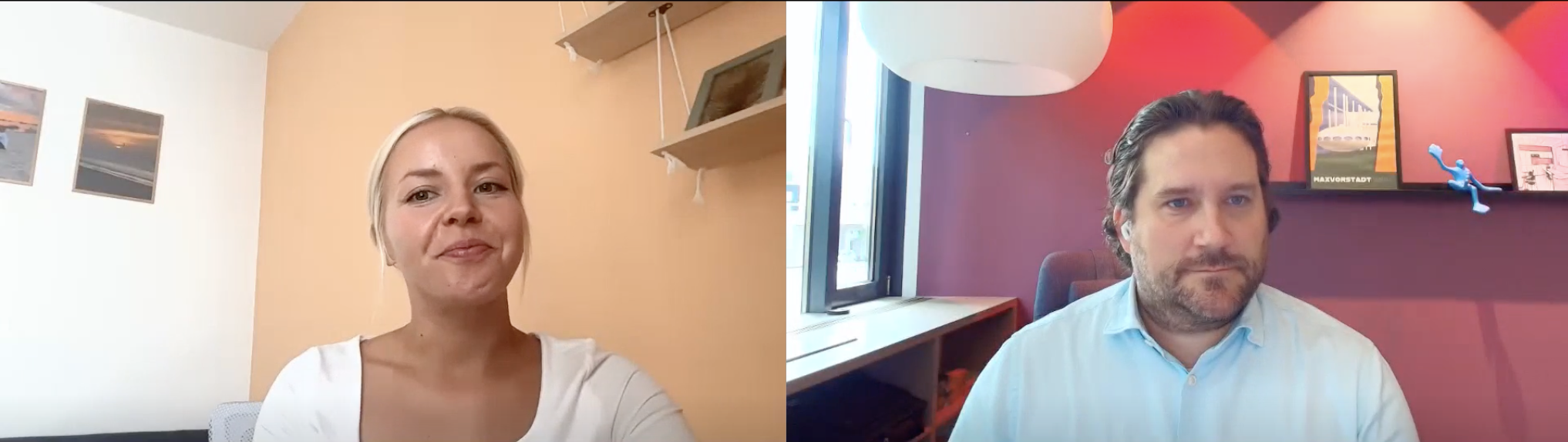
About the interviewee: as an expert at Büroart, Marc Burghoff supports organisations with the ergonomic, safety-compliant design of modern office spaces. This article is based on a joint video interview by Büroart and Seatti.
You run desk sharing and want to make your risk assessment audit-proof? Talk to us and we will show you how usage and presence data can serve as robust evidence.
Häufig gestellte Fragen
The obligation itself is not new. What is new is that DGUV Rule 115-401 (January 2026) explicitly addresses desk sharing for the first time, and the risk assessment has to be approached systemically rather than per workplace: every bookable desk must be suitable for every potential user.
No. The furniture must be suitable, but it must also be demonstrable that the adjustability is usable and actually used (instruction, notices at the desk, usage evidence).
Partly, yes. Under the revised DGUV Regulation 2, up to one third of the support time may be delivered digitally, provided the expert already knows the operational conditions in person. Initial inspections and space-related assessments remain on-site appointments.
Deficient documentation can be fined with up to €5,000; non-compliance with an official order with up to €30,000. Deliberate endangerment of life or health becomes a criminal matter under Section 26 ArbSchG.
Aggregated, anonymised utilisation data are generally unproblematic. Personal data (who was where and when) are subject to co-determination under Section 87 BetrVG and require a works agreement. What matters is purpose limitation and the configurability of the platform used.
Seatti delivers the third building block of the evidence: a robust basis of usage and utilisation data. Booking data, IP presence and analyses make visible which desks are used and how, configurable in anonymised and aggregated form, so that the risk assessment rests on data rather than assumptions.


.avif)
